Solar Lights for Yard Without Electricity: Complete Guide
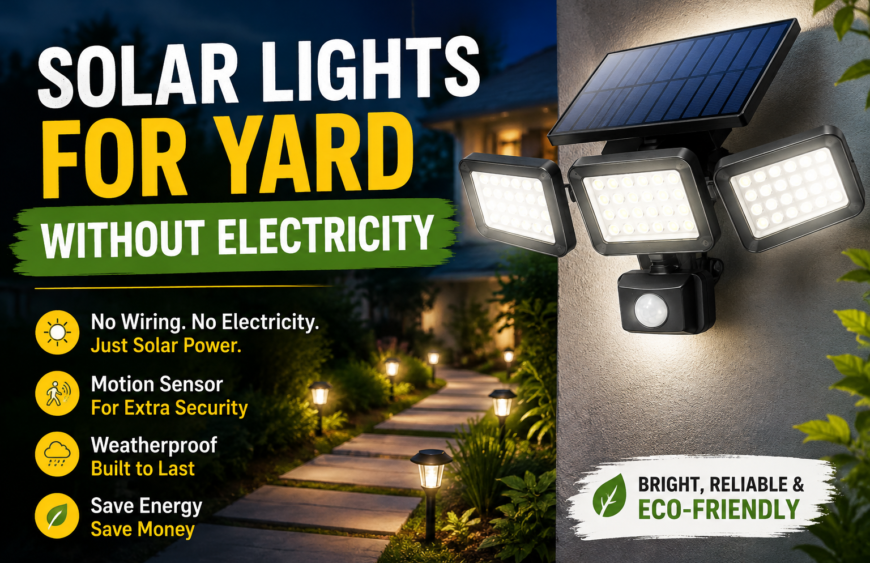
Yes, you can light your yard without electricity. Solar-powered lights use a small solar panel to charge a battery during the day, then automatically illuminate at night using that stored energy. They require no electrical wiring, no trenching, no electrician, and no ongoing electricity costs. Solar lights for yard without electricity are a practical, increasingly effective solution for illuminating pathways, gardens, driveways, and outdoor living spaces where running power is difficult or expensive.
The technology has improved significantly in recent years. Modern solar lights can provide reliable, bright illumination that rivals wired options for many applications, while offering complete placement flexibility and zero operating costs.
Can You Light a Yard Without Electricity?
Lighting an outdoor space without grid electricity is entirely possible. There are three main approaches:
Solar-powered lighting is the most common and practical option. These self-contained units combine a solar panel, battery, and LED light in one fixture. They charge during daylight and illuminate at night. No wiring, no trenching, no permits, and no electrician required. Installation is as simple as mounting or placing the unit in a sunny location.
Battery-powered lights are another option, available in models that use replaceable or rechargeable batteries. They offer reliable illumination regardless of sunlight availability, but require regular battery changes or recharging, creating ongoing costs and maintenance.
Generator-powered lighting uses portable generators to power traditional fixtures. This approach provides conventional light quality but creates noise, fuel costs, and emissions, making it generally impractical for routine yard lighting.
For most homeowners, solar lighting represents the ideal balance of convenience, cost-effectiveness, and environmental responsibility. The key is understanding how the technology works and choosing the right products for your specific needs.
How Solar Yard Lights Work
Understanding the components of a solar lighting system helps you make informed choices and set realistic expectations.
Solar Panel
The solar panel captures sunlight and converts it into electrical energy. Most outdoor solar lights use monocrystalline or polycrystalline panels. Higher-quality panels have better conversion efficiency, meaning they generate more power from the same amount of sunlight.
The solar panel also functions as a light sensor in many designs—when light levels drop at dusk, the circuit activates the light.
Rechargeable Battery
The battery stores energy captured during the day for use at night. Common battery types include nickel-metal hydride (Ni-MH), nickel-cadmium (Ni-Cd), and lithium-ion. Battery capacity, measured in milliamp-hours (mAh), determines how long the light can operate after dark.
A typical solar light with a 600mAh to 1000mAh battery can power an LED for five hours or more, depending on the battery’s capacity and the LED’s power consumption.
LED Light
LED technology is central to solar lighting’s effectiveness. LEDs produce bright light while consuming minimal power—typically using up to 90% less energy than incandescent bulbs. This efficiency allows solar lights to provide useful illumination from the limited energy stored in a single battery.
Light Sensor
Also called a dusk-to-dawn sensor, this component detects when ambient light falls below a threshold and automatically activates the light. In many designs, the solar panel itself serves as this sensor, simplifying the circuit and reducing components.
Motion Sensor
Many solar security and pathway lights include passive infrared (PIR) sensors that detect movement. When motion is detected, the light either turns on or increases its brightness. This feature conserves battery power by providing full brightness only when needed.
Charging Cycle
During daylight, the solar panel generates electricity that charges the battery. A charge controller, often integrated into a single chip, regulates this process to prevent overcharging and maximize battery life. When dusk falls, the sensor activates the light, drawing power from the stored battery energy. This cycle repeats daily with no manual intervention.
Best Places to Use Solar Lights Without Wiring
Solar lights offer placement flexibility that wired systems cannot match. Here are the most effective locations for solar lighting:
Backyard — Install solar flood lights or wall lights to illuminate outdoor living spaces, seating areas, and play zones. Position panels where they receive maximum daytime sun.
Garden — Solar garden lights enhance flower beds and landscaping with soft, ambient lighting. Decorative stake lights and accent lights add visual interest without competing with plants for water or soil access.
Driveway — Solar bollard lights or post lights define driveways, improving nighttime visibility and creating a welcoming approach to your home. Driveway lights without electricity are a popular application for solar technology.
Walkway and Pathway — Pathway lights without wiring provide safety and aesthetic appeal. Install solar stake lights every 6-8 feet along walkways for consistent illumination and clear navigation.
Patio — Solar string lights and table lamps add ambiance to outdoor living spaces. With no outlets required, you can position lights wherever guests gather.
Fence — Solar post cap lights transform fences into functional lighting features. They mount directly on top of fence posts, requiring no additional wiring or fixtures.
Garage and Shed — Solar wall lights illuminate garage entrances and shed exteriors, improving safety and convenience. Fixed wall-mounted lights provide consistent illumination for workspaces and storage areas.
Porch — Solar sconces and hanging lights offer porch lighting without wiring. They provide visible light for finding keys and welcoming guests.
Outdoor Signs — Specialized solar sign lights illuminate address markers, business signs, and property identifiers.
Dark Corners — Solar lights eliminate dark spots in corners, behind sheds, and under eaves where running electrical wiring would be complicated.
Security-Sensitive Areas — Motion sensor solar lights can illuminate entry points, gate areas, and other locations where additional visibility improves safety.
Best Types of Solar Lights for a Yard
Different applications call for different types of solar lights. Here is a comparison to help you choose:
| Type | Best For | Main Advantage | Important Consideration |
|---|---|---|---|
| Solar Pathway Lights | Walkways, garden borders | Easy installation with ground stakes; define paths clearly | Brightness varies significantly between models; check lumen output |
| Solar Flood Lights | Security areas, large spaces | High brightness; wide coverage area | Requires good sunlight exposure and larger battery capacity |
| Solar Wall Lights | Porches, garages, building exteriors | Permanent installation; weather-resistant | Must be mounted securely; panel position affects performance |
| Solar Motion Sensor Lights | Security-sensitive areas, energy savings | Activates only when needed; conserves battery | Detection range varies; not a complete security solution alone |
| Solar Garden Lights | Decorative garden accenting | Aesthetic appeal; variety of designs | Limited brightness; primarily decorative rather than functional |
| Solar Sign Lights | Address signs, business signage | Focused illumination; highlights specific features | Requires targeted placement and proper aiming |
| Decorative Solar Lights | Patios, outdoor entertaining | Adds ambiance with string lights, jars, and lanterns | Lower brightness; designed for atmosphere rather than visibility |
Solar Pathway Lights
These are the most common and widely used solar lights. They typically consist of a stake-mounted fixture with a small solar panel on top and an LED below. Installation involves pushing the stake into soft ground or gravel. They automatically illuminate at dusk and remain lit through the night, providing clear guidance along walkways and garden edges.
Look for adjustable height options—some models include extension pieces that allow for customization between one and two feet tall.
Solar Flood Lights
Flood lights provide broad, bright illumination over large areas. They are particularly effective for backyard lighting, security applications, and illuminating driveways. Many models include motion sensors that activate only when movement is detected, preserving battery life for extended operation.
High-quality solar flood lights feature adjustable heads that allow you to direct light exactly where needed. Weather resistance (IP65 or higher) is essential since these lights typically remain exposed to the elements year-round.
Solar Wall Lights
These fixtures mount permanently to exterior walls, posts, or fences. They provide consistent illumination for entrances, garages, and outdoor areas near buildings.
Solar wall lights often include integrated dusk-to-dawn sensors and may feature motion detection options. Installation typically involves screwing the fixture to the wall—no wiring required—making them an excellent alternative to hardwired sconces.
Solar Motion Sensor Lights
These lights activate when movement is detected. Available in floodlight and wall-mounted configurations, they offer multiple operating modes:
Mode 1 – Constant On: The light stays at a constant brightness all night, regardless of motion.
Mode 2 – Dim-to-Bright: The light remains on at a dim level, then increases to full brightness when motion is detected, returning to dim after motion stops.
Mode 3 – Off-to-Bright: The light stays off until motion triggers it to full brightness, then turns off after motion stops.
Motion sensor lights are energy-efficient and effective for security applications and areas where full-time illumination is unnecessary.
Solar Garden Lights
These decorative lights enhance landscaping with soft, atmospheric illumination. Designs include animal-shaped stakes, glowing globes, and artistic metalwork. They add visual interest during both day and night, with the fixture itself serving as a decorative element.
Garden lights generally provide lower brightness than functional lighting, typically producing 15-100 lumens. Their primary purpose is creating ambiance rather than illuminating tasks or paths.
Solar Sign Lights
Specialized lights designed to illuminate address signs, house numbers, or business signage. They provide focused brightness that highlights the sign without creating glare. Many include small solar panels mounted nearby or integrated into the fixture.
Decorative Solar Lights
This category includes solar string lights, jar lanterns, and portable lamps. They create ambiance for entertaining and relaxing outdoors. Decorative lights often produce a warm, soft glow ideal for patios, decks, and seating areas.
Solar string lights typically use small LED bulbs—around 50 lumens each—and can run for several hours on a full charge. They are IP67-rated for water resistance and come with adjustable solar panels for optimal positioning.
Solar Lights vs Wired Outdoor Lighting
| Factor | Solar Lighting | Wired Lighting |
|---|---|---|
| Installation | Simple, often DIY; push stakes or mount fixtures | Complex; requires electrician, wiring, and permits |
| Wiring | None required | Extensive trenching and cabling needed |
| Electricity Usage | Zero operating costs | Monthly electricity bills |
| Maintenance | Occasional panel cleaning; battery replacement every 2-3 years | Bulb changes; occasional electrical repairs |
| Placement Flexibility | Unlimited; place anywhere with sun exposure | Constrained by electrical box locations |
| Brightness | Good for general illumination; lower than wired | Can provide higher brightness; unlimited by power constraints |
| Weather Exposure | Weather-sealed (IP65, IP67 options); panels may need occasional cleaning | Weather-sealed; wiring connections can degrade |
| Operating Cost | No ongoing costs | Ongoing electricity consumption costs |
Solar lighting excels in flexibility and simplicity. You can place lights anywhere sun reaches, with no concern about existing infrastructure. The lack of wiring means no trenching through gardens or drilling through walls.
Wired lighting provides higher brightness and consistent performance regardless of sunlight. It remains the best choice for critical security lighting and areas where high-output illumination is essential.
How to Choose Solar Lights for Your Yard
Brightness (Lumens)
Lumens measure the total amount of visible light emitted. For context:
- Pathway accent lights: 15-50 lumens
- Garden decorative lights: 15-100 lumens
- Walkway/path lights: 100-300 lumens
- Security/motion lights: 300-700+ lumens
Consider your needs: decorative lights can be lower output, while security and task lighting requires higher brightness.
Solar Panel Position
Look for lights with adjustable solar panels. This feature allows you to position the panel for maximum sunlight while aiming the light where you want it. Fixed panels limit placement options and can reduce charging efficiency.
Battery Capacity
Higher battery capacity translates to longer operating time. Check the specified battery specifications—larger mAh ratings generally provide more runtime. Lithium-ion batteries offer better performance and longer lifespan than Ni-Cd or Ni-MH alternatives.
Motion Detection
If choosing motion sensor lights, check:
- Detection angle (typically 120 degrees)
- Detection distance (usually 10-16 feet)
- Number of operating modes available
These specifications determine how effectively the sensor covers your intended area.
Coverage Angle
The angle determines how wide a beam the fixture produces. Narrow beams work well for spotlighting specific features; wide beams are better for general area illumination.
Weather Resistance
Look for IP (Ingress Protection) ratings:
- IP65: Dust-tight and resistant to water jets
- IP67: Dust-tight and protected against temporary immersion
Outdoor lights should be at least IP65 rated for reliable year-round performance.
Operating Time
Consider how long you need the light to operate each night. Most solar lights offer 6-12 hours of runtime with a full day of sun. More expensive models may offer extended runtime for locations with longer winter nights.
Mounting Options
Consider your preferred mounting method:
- Ground stakes for soil and gravel
- Wall mounts for buildings and fences
- Post caps for fence posts and pillars
Light Color
Warm white (2700K-3000K) provides a soft, inviting glow suitable for most residential applications. Cool white (4000K-5000K) appears brighter and more clinical. Choose based on your aesthetic preferences and intended use.
Adjustable Heads
Fixtures with adjustable heads let you direct light where needed most—a valuable feature for wall lights, flood lights, and security lights.
How to Position Solar Lights for Maximum Sunlight
Direct sunlight is essential for optimal solar light performance. Position your solar panel where it receives 6-8 hours of unobstructed sunlight daily. This means:
- South-facing locations in the Northern Hemisphere receive the most consistent sunlight.
- Avoid shaded areas—even partial shade significantly reduces charging capacity.
- Consider seasonal changes—trees that provide summer shade may lose leaves in winter, altering sunlight patterns.
- Angle the panel appropriately—some adjustable panels allow tilting to follow the sun’s path.
Common positioning mistakes include installing panels under tree canopies, in the shadow of buildings, or against north-facing walls. If your yard has unavoidable shade, consider separate solar panels mounted remotely where they can receive more sunlight.
How Long Do Solar Yard Lights Last at Night?
Runtime varies based on:
- Battery capacity — Larger batteries store more energy.
- Sunlight received — Full sun = full charge; cloudy days = reduced charge.
- Brightness settings — Higher brightness consumes more battery.
- Season — Winter provides fewer daylight hours.
- Battery age — Batteries lose capacity over time.
Most quality solar lights provide 6-12 hours of runtime with a full day of sunlight. Motion sensor lights operate longer because they only use full brightness when needed. Lower brightness settings and energy-efficient LEDs extend operating time.
Are Solar Motion Sensor Lights Good for Security?
Solar motion sensor lights are useful for security awareness but should not be considered a complete security solution. They provide appropriate lighting for:
- Illuminating entry points when movement is detected
- Deterring casual trespassers through visible lighting
- Improving visibility for cameras and residents
- Reducing energy consumption by activating only when needed
However, solar motion lights have limitations:
- They rely on adequate sunlight for charging
- Cloudy weather reduces performance
- They illuminate after motion starts, not before
- Detection range is limited (typically 10-16 feet)
For general security awareness, solar motion lights are an effective component of a broader security strategy that includes visible deterrents, proper locks, and potentially security cameras.
Common Solar Lighting Mistakes
Installing Panels in Shade
This is the most common and damaging mistake. Solar lights need direct sunlight—not just ambient daylight—to charge properly. A light placed under a tree or on a north-facing wall will never perform as expected.
Placing Lights Too Close Together
Overlapping light coverage wastes battery power and creates uneven illumination. For pathway lights, place them 6-8 feet apart for consistent coverage.
Choosing Insufficient Brightness
Not all solar lights are created equal. “Bright” is subjective, and many budget lights produce barely visible glow. Check lumen specifications and buy based on your actual needs.
Ignoring Weather Exposure
Outdoor lights must be weather-rated for your climate. In areas with heavy rain or snow, IP65 or higher protection is essential.
Poor Positioning
Placing lights too high, too low, or angled incorrectly limits their effectiveness. Test positions before permanently installing.
Ignoring Battery Specifications
Battery capacity directly affects runtime. Choosing smaller batteries for lower cost results in lights that turn off too early.
Expecting Decorative Lights to Replace Security Lighting
Decorative solar lights provide ambiance, not illumination. Don’t confuse aesthetic lighting with functional illumination for safety or security.
Step-by-Step: How to Install Solar Yard Lights
Step 1: Choose Your Location
Identify where you want light and ensure the area receives 6-8 hours of direct sunlight daily. If necessary, consider installing separate solar panels in sunnier spots.
Step 2: Prepare the Installation Site
For stake lights, remove obstacles like rocks or roots from soil. For wall mounts, verify mounting surface can support the fixture and mark screw positions.
Step 3: Turn On the Light
Most solar lights include an on/off switch. Turn it on before installation—many won’t charge or operate if left in the “off” position.
Step 4: Install the Light
Ground stakes: Push into soil until stable, usually 1-2 inches below the surface.
Wall mounts: Screw into wall using included hardware.
Post caps: Place on top of posts and secure with screws.
Step 5: Allow Charging
Let the light charge in full sunlight for 1-2 full days before testing performance. This ensures the battery reaches maximum capacity.
Step 6: Test and Adjust
At dusk, verify the light activates and provides appropriate illumination. Adjust angles or positions as needed.
Step 7: Maintain
Clean the solar panel with a soft cloth periodically to remove dust and debris that can reduce charging efficiency. Replace batteries when performance noticeably declines, typically every 2-3 years.
Best Solar Lighting Setup for Different Yards
Small Yard
A compact yard benefits from solar pathway lights along paths and decorative lights for atmosphere. Motion sensor wall lights near entrances provide security awareness.
Medium Backyard
Combine solar flood lights for main areas, pathway lights for circulation, and string lights for patio ambiance. Use multiple lighting zones controlled by separate fixtures.
Large Yard
Larger yards require more powerful flood lights with higher lumen output and larger battery capacity. Consider lights with separate solar panels that can be positioned for optimal sunlight while the fixture illuminates distant areas.
Driveway
Line both sides of the driveway with post lights or bollard lights. Space them 8-10 feet apart for even coverage. Place brighter fixtures at the entrance and near the garage.
Garden
Use decorative stake lights to highlight specific plants and features. Solar garden lights with artistic designs add visual interest during daytime as well as nighttime.
Pathway
Install stake lights along both sides of walkways, spacing them 6-8 feet apart. Choose fixtures that project light downward to illuminate walking surfaces without glare.
Rental Property
Solar lighting is ideal for rentals because it requires no permanent modifications. Use stake lights, hanging lights, and ground-mounted fixtures that can be removed when moving.
Frequently Asked Questions
How do solar lights for yard without electricity work?
Solar lights use a small panel to capture sunlight and convert it into electrical energy, which charges an internal battery. At dusk, a light sensor activates the LED, which runs on stored battery power all night. No electrical connection is needed.
Can solar lights work in a shaded yard?
Solar lights need direct sunlight to charge effectively. Shade significantly reduces charging efficiency and battery capacity. If your yard is heavily shaded, consider lights with remote panels that can be placed in sunnier spots.
How long does a solar light take to charge?
Most solar lights require 6-8 hours of direct sunlight for a full charge. New installations may benefit from 1-2 full charge cycles before achieving full performance.
How many lumens do I need for solar yard lights?
Pathway accent lights need 15-50 lumens, walkway lighting needs 100-300 lumens, and security lighting needs 300-700+ lumens. Match the brightness to the intended use.
Are solar motion sensor lights waterproof?
Quality solar lights are weather-rated for outdoor use. Look for IP65 or IP67 ratings for reliable performance in rain, snow, and varied temperatures. Not all solar lights are waterproof, so check specifications.
How long do solar lights stay on at night?
With a full day of sunlight, most solar lights provide 6-12 hours of runtime. Actual duration depends on battery capacity, brightness settings, and seasonal sunlight availability.
Do solar lights need direct sunlight or just daylight?
Solar lights need direct sunlight—not just ambient daylight—to charge effectively. Indirect light produces some charging but significantly less than direct sun.
Can solar lights be used in winter?
Yes, but shorter daylight hours and lower sun angles reduce charging capacity. Choose lights with larger battery capacity for winter performance, and ensure panels are positioned for maximum sunlight.