
Choosing the right bathroom sconce height above a mirror improves both the look of a vanity and the quality of light on your face. A fixture mounted too high can create shadows beneath the eyes and chin; one mounted too low may cause glare or crowd the mirror. The best position depends on the mirror, fixture design, ceiling height and the people who use the bathroom.
Quick height guidelines
For side-mounted sconces, use the center of the light source around 60–66 inches (152–168 cm) above the finished floor as a starting point. For a single vanity light above the mirror, a common starting range is approximately 75–80 inches (190–203 cm). These are planning guidelines, not universal code requirements. Adjust them to the mirror dimensions, fixture shape and user’s face height.
- Side sconces: start around 60–66 inches to the light source.
- Above-mirror fixture: start around 75–80 inches, checking clearance and light spread.
- Tall mirrors, unusual ceiling heights and different user heights may require adjustments.
- Always follow the fixture instructions and local electrical requirements.

Why sconce height matters
Bathroom lighting must support grooming as well as general visibility. A ceiling light shines down from above and can create shadows around the eyes, nose and chin. Lights positioned closer to face level can illuminate the face more evenly. Height also affects glare: an exposed lamp in the normal line of sight may feel harsh, while a shade that hides the lamp can narrow the beam. Aim for comfortable, balanced light rather than simply maximizing brightness.
Best placement: two sconces beside the mirror
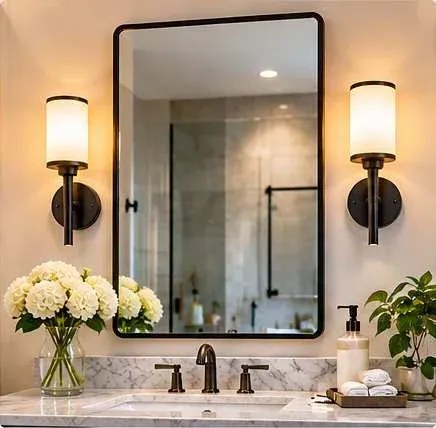
A pair of vertical sconces on either side of a mirror is often an effective vanity arrangement. Place the light sources near face height, using 60–66 inches from the finished floor as a starting point. The center of the fixture is not always the center of its light source, so check the product drawing before marking the wall.
Spacing from the mirror
Space fixtures so they illuminate both sides of the face without crowding the mirror. Measure the complete shade, backplate and projection—not only the electrical box. A wide mirror may need carefully positioned lights rather than fixtures pushed to the far ends. A narrow mirror may work better with slim sconces. Use painter’s tape to mock up the proposed locations and stand at the vanity before drilling.

When a single fixture above the mirror works
An above-mirror light can be practical when cabinets or narrow walls leave no room for side fixtures. Choose a model with broad, diffused output rather than a narrow beam. Mount it high enough to clear the mirror and cabinet doors, but not so high that it mainly lights the top of the head. The 75–80-inch range is only a starting point; the mirror’s top edge and fixture dimensions should determine the final location.
Adjusting for common bathroom layouts
Small bathroom
Use compact fixtures and measure the mirror, backsplash, faucet and nearby trim together. Keep the sconces visually aligned with the mirror and clear of shelves or medicine cabinets.
Double vanity
Consider whether each sink needs its own balanced lighting. Two lights at the far outer edges of a wide mirror may leave the faces near the middle poorly lit. Test the layout from both sink positions.
Mirrored medicine cabinet
Check door swing, hinge location and the cabinet’s projection. A sconce may need extra clearance from the mirror edge so the door opens freely.
Unusual wall or ceiling height
Prioritize the user’s face position and the mirror rather than forcing a standard measurement onto the room. Ask a lighting professional or electrician to help with unusual wiring or wall conditions.
Brightness and color temperature
Choose even, diffused light with good color rendering. A CRI of 90 or higher is useful when accurate skin tone and makeup color matter. Many bathrooms feel comfortable with 2700K–3500K white light, although personal preference and existing finishes should guide the choice. Frosted glass can soften glare; clear glass can look decorative but may expose a bright lamp. Dimmable lighting is useful when the lamp and dimmer are compatible.
Consider lumen output, beam direction and shade material together. A very bright lamp in a narrow shade can create harsh patches, while a diffused fixture may provide a more comfortable result at a lower output.

Bathroom safety and electrical requirements
Moisture makes fixture suitability important. Check the product’s location rating and installation instructions. The required rating depends on the fixture’s position relative to showers, tubs and water sources, as well as local rules. Do not assume every decorative wall light is suitable for bathroom use.
- Confirm the fixture is approved for the intended bathroom location.
- Use the specified mounting hardware and wiring method.
- Keep fixtures clear of shower spray and follow local zone requirements.
- Switch off the circuit at the breaker and verify power is off before work.
- Use a licensed electrician when wiring or code compliance is uncertain.
Planning checklist before drilling
- Measure the finished floor to the mirror top and proposed fixture center.
- Check fixture height, width, projection and backplate size.
- Mark both locations with painter’s tape.
- Stand at the vanity and check the light position at normal eye level.
- Check cabinet doors, towel bars, switches, trim and faucet clearance.
- Confirm the electrical box location and product rating.
- Have an electrician verify the final placement and wiring when needed.
Explore more bathroom and wall-lighting ideas
See our guide to bathroom lighting ideas, browse wall lights and sconces, or read about rattan wall light placement.


Choosing Sconce Position for Different Mirror Sizes
The mirror’s width and the vanity layout should guide the final position of each wall sconce. Start by measuring the mirror and marking its centre line. Then plan the lights so they sit to the left and right of the mirror with enough clearance for the fixture body, shade and any cabinet doors. Avoid placing a sconce so close to the mirror edge that the shade overlaps the reflective surface or restricts access to the mirror.
For a narrow mirror, compact vertical fixtures can provide useful side lighting without crowding the wall. A wide mirror or double vanity may need a wider spacing plan, and each user should receive balanced light rather than having both fixtures concentrated around the centre. Check the fixture’s dimensions before drilling; the mounting plate, shade width and projection from the wall all affect the usable clearance.
Also consider the direction of the light. Diffused shades and fixtures that send light both forward and sideways can reduce harsh shadows across the face. A bare bulb or exposed LED may create glare if the user looks directly toward it. When possible, test the proposed positions with painter’s tape and temporary measurements before making holes.
For a room-specific measurement checklist, compare these recommendations with our wall sconce placement guide. Always confirm the bathroom fixture’s location rating and installation instructions before purchase or installation.
Frequently asked questions
Should bathroom sconces be at eye level?
That is a useful starting principle. Place the light source near the typical user’s face height, then adjust for shade shape and beam direction.
Are sconces better beside or above a mirror?
Side sconces often provide more balanced facial lighting. An above-mirror fixture is useful when space is limited, provided it spreads light evenly.
How high should sconces be above a vanity?
Measure from the finished floor. A starting range of 60–66 inches to the light source works in many layouts, but mirror size, user height and fixture design matter.
Can ordinary indoor wall lights be used in a bathroom?
Only if the product is rated for the specific location and complies with local requirements. Check the manufacturer’s instructions and ask an electrician if unsure.
What color temperature is best?
Many people prefer 2700K–3500K. Choose a high-CRI source when accurate color appearance matters.
Final recommendation
Use 60–66 inches to the light source for side sconces and around 75–80 inches as an initial reference for an above-mirror fixture. Adapt the plan to the mirror, fixture dimensions and people using the vanity. A taped mock-up and a final safety check are more reliable than following one measurement blindly.


